
Assisted Living vs Nursing Home in Singapore: What Is the Difference?
Assisted living focuses on daily living support, independence, and companionship in a home-like setting. Nursing homes are suited for seniors with higher medical dependency. The right choice depends on your parent’s current care needs.
The short answer
Choose Assisted Living If Your Parent Needs Daily Support — Not Intensive Nursing
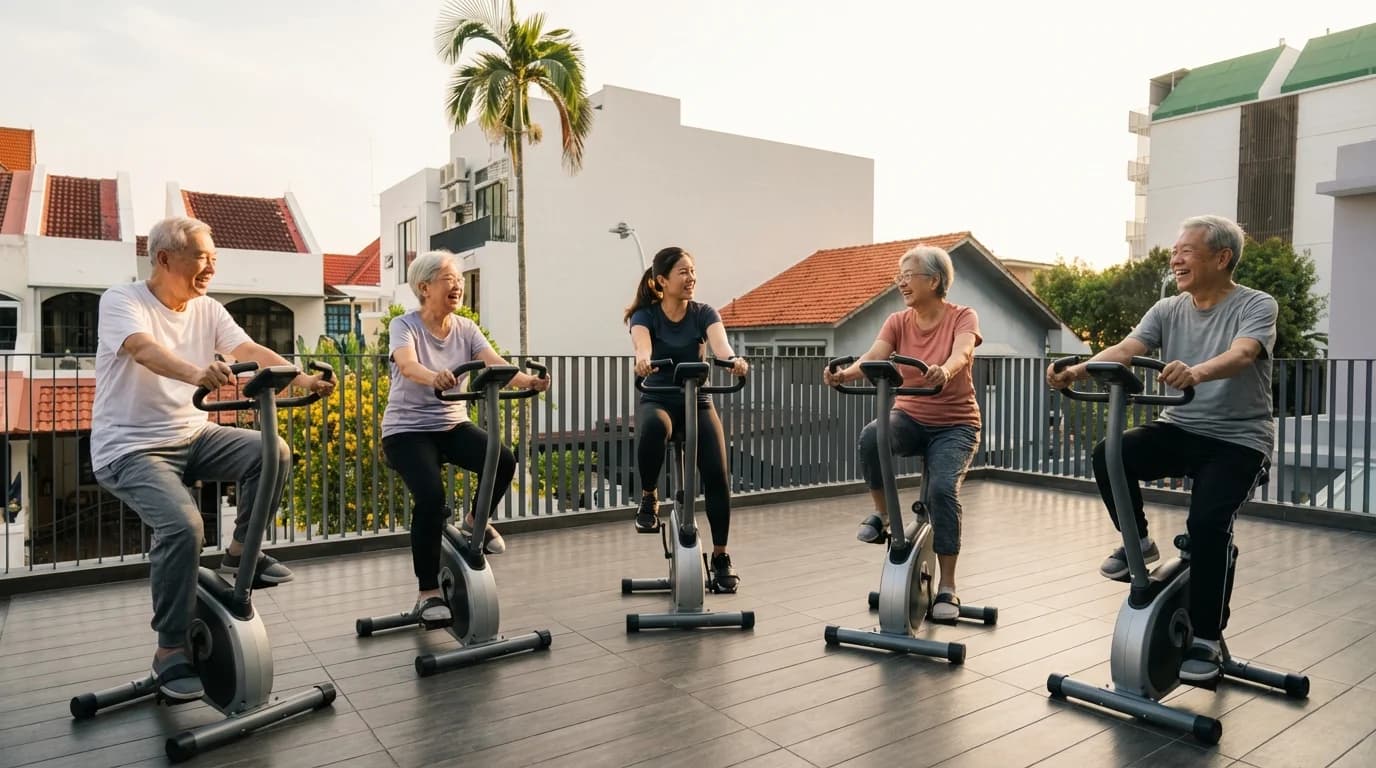
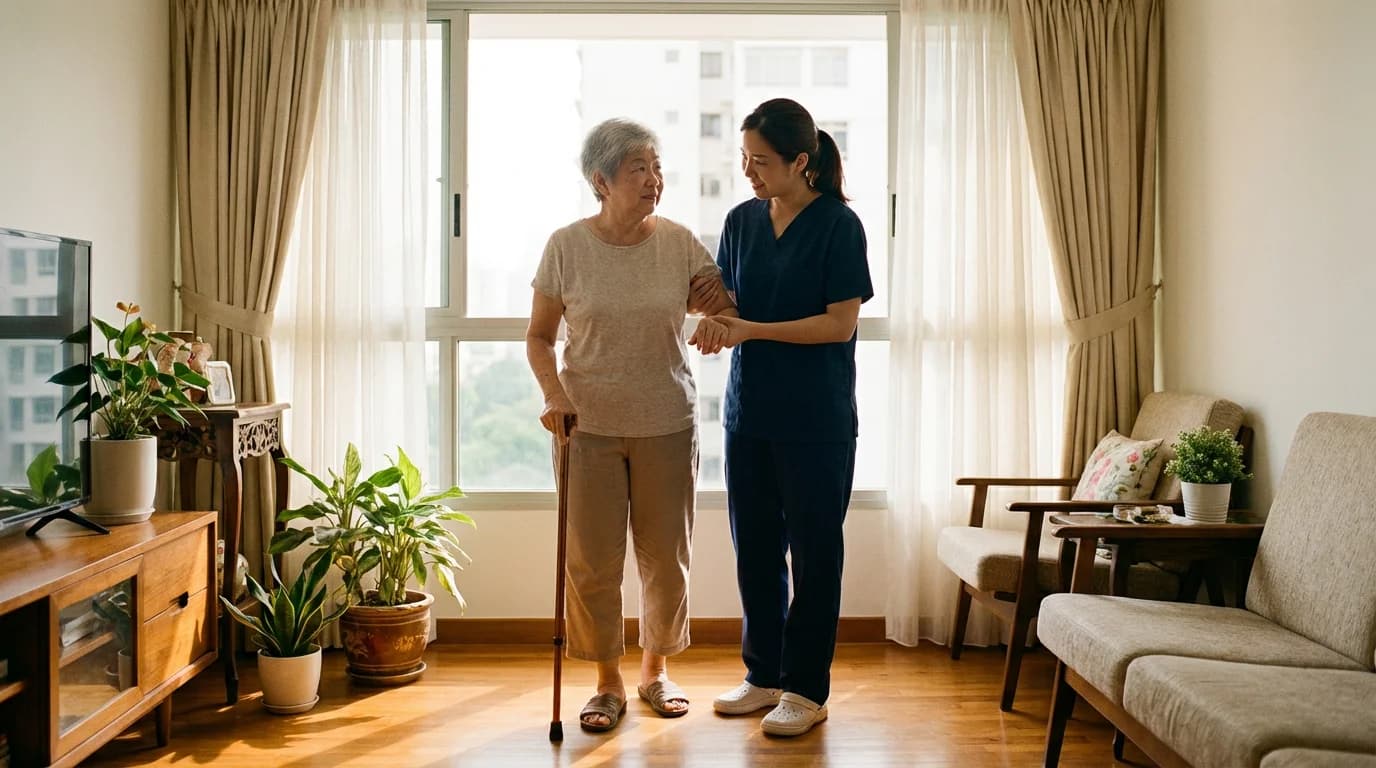
Assisted living is appropriate when a senior needs help with daily routines — meals, bathing, dressing, medication management — alongside companionship and a safe, structured living environment. The setting is home-like. The community is small.
A nursing home in Singapore is better suited when a senior has complex medical needs that require continuous clinical monitoring, advanced wound care, or intensive nursing intervention that goes beyond daily living support.
Many families searching for a nursing home discover that assisted living is actually the more appropriate — and more liveable — option for their parent’s current situation.
What Is Assisted Living?
Assisted living is a residential care option for seniors who need support with daily activities but do not require the intensive medical or nursing care of a hospital or nursing home.
Small, home-like residences — typically 8–15 residents
24/7 on-site caregiver support
Regular licensed nursing visits and health monitoring
Personal care — bathing, dressing, grooming, mobility
Medication management and prescription coordination
Daily meals with dietary modifications
Therapeutic activities and social programmes
Open family visiting hours
AIC-approved with subsidy eligibility in Singapore
Learn more: Assisted living in Singapore
What Is a Nursing Home?
A nursing home in Singapore is a licensed residential healthcare facility providing continuous nursing and medical care for seniors with high-dependency needs.
Larger facilities — typically 30 to 100+ residents
24/7 licensed nursing and medical care on-site
Suited for seniors with complex or high-acuity medical conditions
Wound care, tube feeding, ventilator support if required
More structured and clinically focused environment
Typically ward-based or shared bay rooms
MOH-licensed and regulated
Subsidies available through MOH schemes for eligible residents
Full Comparison: Assisted Living vs Nursing Home
A side-by-side breakdown across the factors that matter most to Singapore families.
| Factor | Assisted Living | Nursing Home |
|---|---|---|
| Setting | Home-like residence, 8–12 residents | Institutional facility, 30–100+ beds |
| Primary focus | Daily living support, independence, and quality of life | Medical and nursing care for high-dependency residents |
| Care staff | 24/7 caregivers + regular licensed nursing visits | 24/7 licensed nurses on-site |
| Medical capability | Health monitoring, medication, wound care coordination | Advanced wound care, tube feeding, complex nursing procedures |
| Room type | Private or shared ensuite rooms | Shared bay or ward |
| Meals | Communal, freshly prepared with dietary options | Functional; mass catered |
| Activities | Structured weekly programme — exercise, therapy, outings | Limited; varies by facility |
| Family visits | Open visiting hours, warm and flexible | Typically scheduled visiting hours |
| Feel | Home-like; community-centred | Clinical; healthcare-focused |
| Subsidies (SG) | AIC-approved; means-tested subsidies available | MOH-subsidised; means-tested for eligible residents |
| Best suited for | Seniors needing daily support, safety, and companionship | Seniors with complex, high-acuity medical needs |
Choose this if…
Assisted Living Is Likely Right
Your parent needs help with daily activities — meals, bathing, dressing, medication
They are safe and communicative, but should not be living alone
They have mild to moderate dementia or early cognitive decline
They would benefit from companionship and a social environment
They are mobile but need supervision or mobility assistance
Their medical needs are stable and manageable with nursing oversight
Family can no longer provide full-time care at home
They are recovering from a hospital stay and need continued support
Choose this if…
A Nursing Home May Be Needed
Your parent has advanced dementia with significant behavioural challenges
They require continuous, on-site registered nursing care
They need advanced wound care, tube feeding, or ventilator support
Their medical condition is complex or rapidly changing
They require frequent interventions that go beyond daily living support
Their GP or specialist has specifically recommended nursing home care
If you are unsure which level of care your parent needs, speak with their GP or contact our care team — we can help you assess the situation honestly.
Other Elderly Care Options in Singapore
Assisted living and nursing homes are not the only options. Here is a brief overview of other common arrangements families consider.
Foreign Domestic Worker (Helper)
A live-in helper can assist with daily tasks at home. Suitable for seniors with lighter care needs who want to remain in the family home. Does not provide nursing oversight, medical management, or therapeutic programming.
Works best for: Light daily support; senior remains at home with family
Day Care Centre
Senior activity and care centres that operate during daytime hours. The senior returns home each evening. Useful as a supplement but does not provide 24-hour support or residential care.
Works best for: Daytime social engagement while family provides evening care
Living with Family
Many families in Singapore provide care at home. This works well when care needs are light. As needs increase, family caregivers often face burnout — at which point assisted living becomes a sustainable longer-term option.
Works best for: Early stage; lighter needs; family capacity is sufficient
Where Blue Atria fits
Assisted Living, Not a Nursing Home — but With Real Care
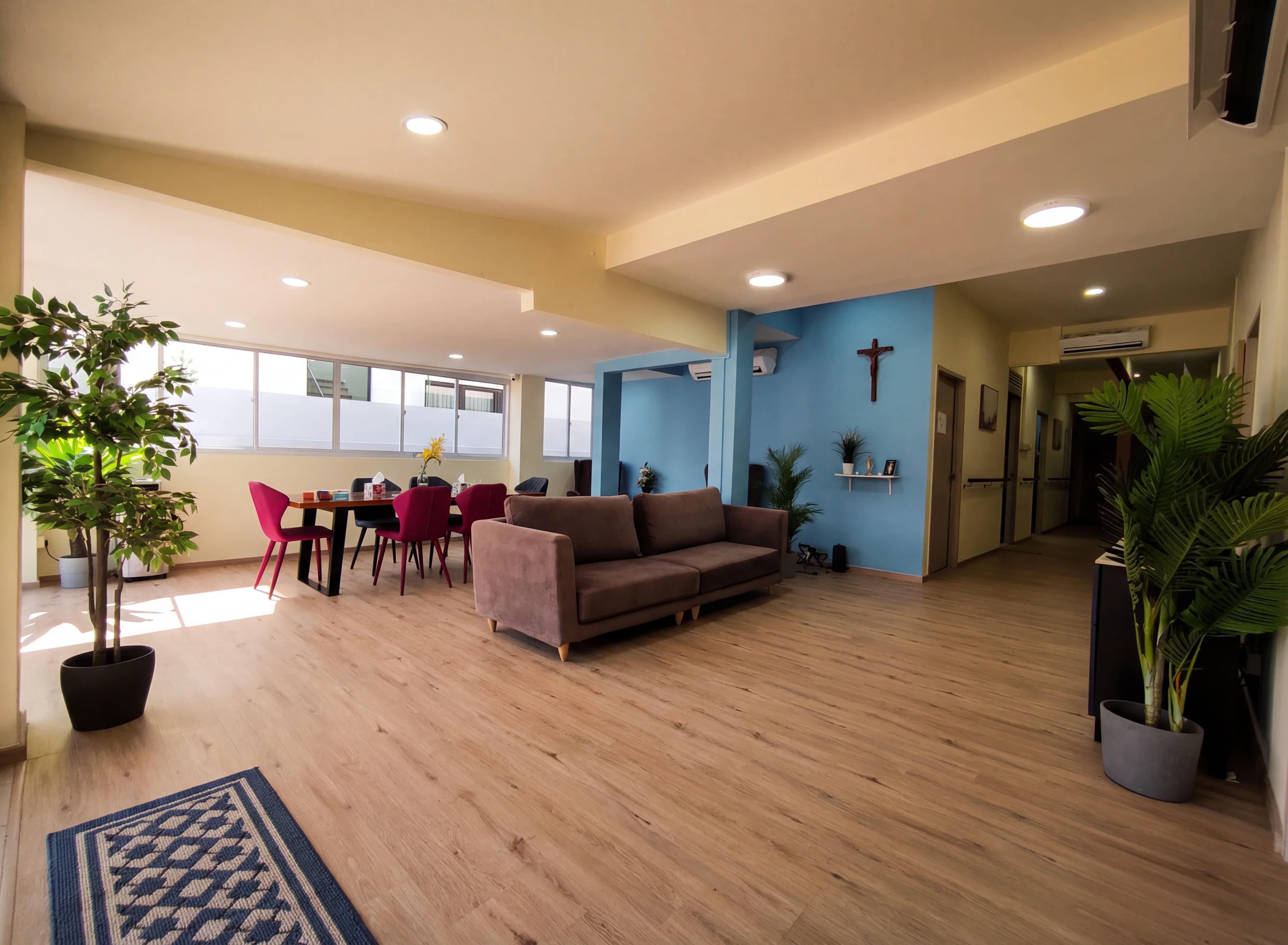
Blue Atria occupies the space between living alone and a nursing home. We provide a genuine home — not a ward — where seniors receive 24/7 caregiver support, licensed nursing oversight, daily meals, and therapeutic activities in a community of 8–12 residents.
As an AIC-approved assisted living provider, we serve seniors with mild to moderate dementia, limited mobility, chronic health conditions, and those who need daily support — but do not require the intensive clinical environment of a nursing home.
4 residences across Singapore
AIC-approved — subsidies available
24/7 caregiver support with licensed nursing
8–12 residents per home
Private and shared ensuite rooms available
Frequently Asked Questions
What is the main difference between assisted living and a nursing home in Singapore?
The main difference is the level of care and the setting. Assisted living is home-like, with a small number of residents receiving daily support — meals, personal care, companionship, and medication management — alongside 24/7 caregiver coverage. Nursing homes in Singapore are larger, more institutionalised facilities suited for seniors with higher medical dependency requiring intensive nursing care.
Is assisted living cheaper than a nursing home in Singapore?
Costs vary depending on the provider, room type, and care needs. Nursing homes often benefit from higher government subsidies for eligible residents under MOH schemes. Assisted living providers like Blue Atria are AIC-approved and also eligible for subsidies through means-tested assistance. The net cost depends on the individual's subsidy eligibility and care requirements.
When is a nursing home a better option than assisted living?
A nursing home is generally more suitable when a senior has complex, high-acuity medical needs requiring continuous clinical monitoring, advanced wound care, ventilator support, or intensive nursing intervention. If your parent's needs are primarily around daily living support, companionship, and moderate health monitoring — assisted living is usually the better fit.
Can a senior move from assisted living to a nursing home later?
Yes. Many families use assisted living as a long-term home while their parent's needs remain moderate. If medical needs eventually increase beyond what assisted living can provide, transitioning to a nursing home is possible. At Blue Atria, we work with families to reassess care needs over time and discuss next steps openly.
Is Blue Atria a nursing home?
No. Blue Atria is a licensed assisted living provider — not a nursing home. We provide 24/7 caregiver support, regular licensed nursing visits, medication management, meals, and therapeutic activities in a small, home-like setting of 8–12 residents. We are AIC-approved and regulated by the relevant government authorities.
How do I decide which is right for my parent?
Start by assessing your parent's current care needs: Can they still communicate, participate in activities, and manage basic movement with some help? Do they need primarily daily support — or intensive clinical nursing care? If it is the former, assisted living is likely the better match. Speak with a care coordinator or your parent's GP to get a clearer picture.
Contact Us