
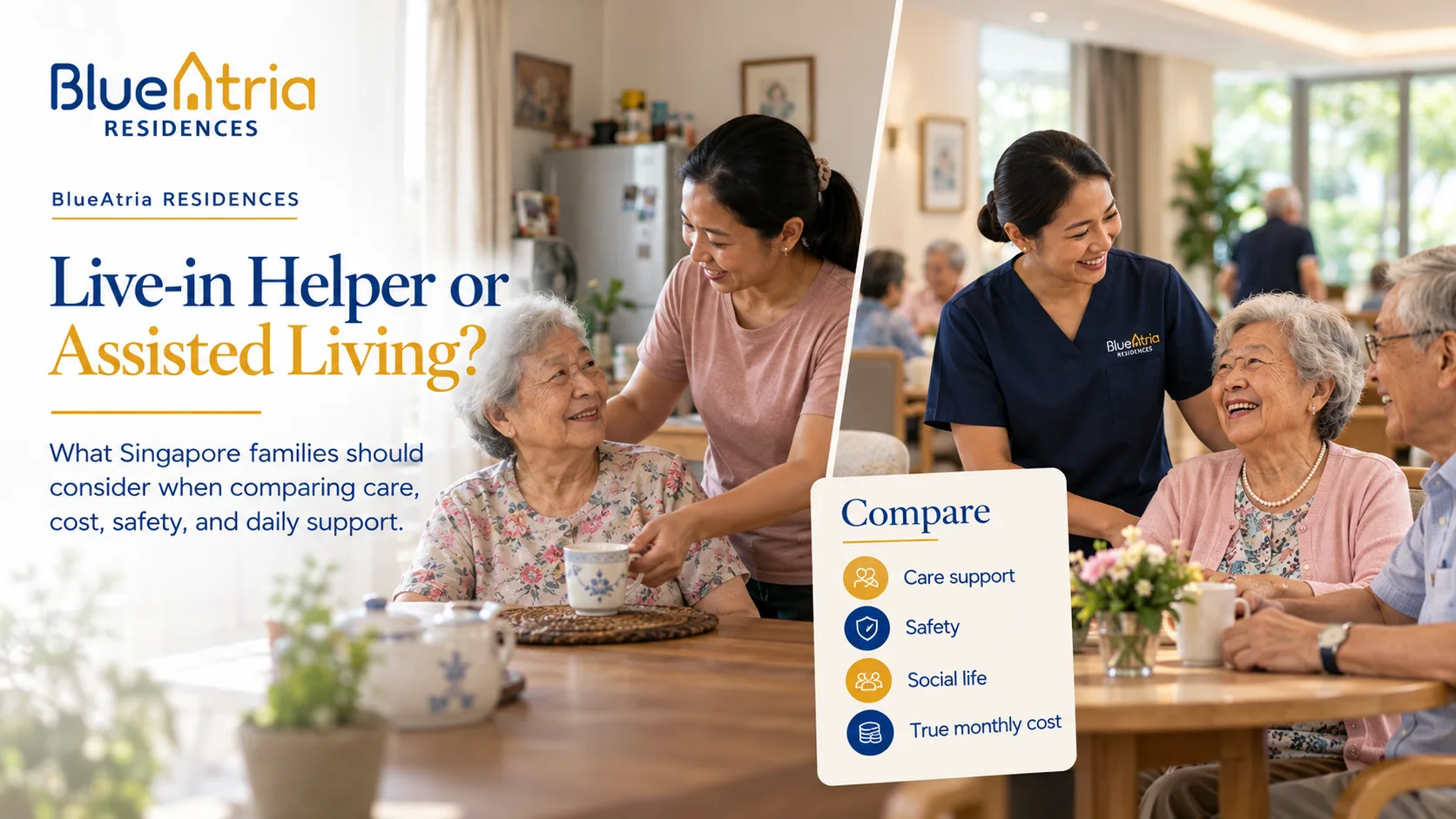
Assisted Living vs a Live-In Helper at Home: An Honest Comparison
· Blue Atria
For many Singapore families, the first instinct when a parent needs more help is to hire a live-in domestic helper. It keeps mum or dad at home, it feels affordable, and it is familiar. For some situations, it is the right answer. But it is worth comparing honestly against assisted living before deciding — because the cheapest headline cost is not always the best value or the safest choice.
What a live-in helper provides
A domestic helper can be a wonderful support: companionship, help with cooking and cleaning, assistance with bathing and dressing, and an extra pair of hands around the home. For a largely independent senior who mainly needs company and light help, this can work well.
But it is important to be realistic about the limits:
- A helper is not a trained nurse or caregiver — they are usually not qualified to manage complex medication, monitor health conditions, or respond to a medical emergency.
- They work alone, often without backup, breaks, or supervision — which is a lot to ask of one person caring for a frail senior around the clock.
- They cannot provide structured activities, therapy, or a social community.
- If the helper falls ill, goes on home leave, or resigns, the family is suddenly without cover.
The true cost of care at home
A helper's salary is only part of the picture. Once you add everything up, the gap with assisted living narrows:
- Monthly salary and the foreign domestic worker levy
- Food, utilities, and living costs for the household
- Medical insurance, agency fees, and periodic replacement costs
- The senior's own meals, medication, and medical appointments
- The family's time spent supervising, coordinating, and filling gaps
Assisted living, by contrast, bundles accommodation, meals, 24/7 trained care, nursing oversight, activities, and utilities into one predictable monthly fee. For a realistic breakdown, see our guide to the cost of assisted living in Singapore.
Where assisted living pulls ahead
Assisted living is designed for seniors who need more than companionship and light help:
- Professional, round-the-clock care with trained caregivers and nursing oversight — not one person working alone.
- A safe, adapted environment with grab bars, step-free access, and emergency response built in.
- A real social community — shared meals, daily activities, and friendships that protect against the isolation and decline that often come with ageing alone at home.
- Reliability — care does not stop because one person is unwell or away.
So which is right?
As a rough guide:
- A live-in helper may suit a senior who is still fairly independent, needs mainly companionship and light assistance, and has family nearby to supervise and manage health needs.
- Assisted living is usually the better fit once a senior needs genuine daily care, has health or mobility concerns, would benefit from social connection, or when caring at home is wearing the family down.
Many families also find assisted living is simply the kinder option for everyone — including themselves. If you are weighing the two, our guides to elderly care options and caring for ageing parents go deeper.
There is no universal right answer — only the one that keeps your parent safe, engaged, and well cared for, in a way your family can sustain. If you would like to talk it through with someone who understands, our care team is here to help.