
How to Move a Parent into Assisted Living: A Step-by-Step Guide (2027)
· Blue Atria
Moving a parent into assisted living is one of the biggest decisions a family makes. Done in a rush, often after a fall or a hospital stay, it can feel overwhelming for everyone. Done step by step, it can be a positive new chapter.
This guide walks you through the whole process, from the first conversation to the first month.
Step 1: Start the conversation early
Bring the topic up before a crisis forces it.
- Choose a calm moment, not straight after an argument or a fall.
- Lead with their wellbeing, not your worries: "I want you to be safe and have company" lands better than "You can't cope any more".
- Listen more than you talk. Ask what worries them. Common fears are losing independence, feeling abandoned, or the cost.
- Expect several conversations. It is normal for the first one to go nowhere.
Step 2: Understand your parent's care needs
Get a clear, honest picture of the help your parent needs day to day.
- Daily activities: bathing, dressing, eating, moving around, using the toilet.
- Health: medications, chronic conditions, recent hospital stays.
- Safety: falls, wandering, forgetting to eat or take medicine.
- Mood: loneliness, low mood, or anxiety when alone.
Talk to their doctor, and if your parent is in hospital, the medical social worker there. They can advise on the level of care needed and the options available.
Step 3: Agree on a budget
Work out what the family can sustainably afford each month, and who contributes. Remember to compare like with like: assisted living usually includes care, meals, utilities and housekeeping, which are separate costs if your parent stays at home.
Our assisted living cost guide breaks this down. For government schemes and subsidies, the Agency for Integrated Care (AIC) at aic.sg is the best place to start.
Step 4: Shortlist and visit homes
Visit at least two or three places, ideally at different times of day. Notice how staff speak to residents, whether residents seem engaged, and whether it feels like a home or an institution. Use our family checklist for choosing an assisted living home.
Step 5: Involve your parent in the choice
People settle far better in a place they helped to choose. Take your parent to visit, let them meet the caregivers and residents, and give their opinion real weight. If they have a strong preference for a neighbourhood, take it seriously.
Step 6: Sort out the paperwork
Gather the essentials before move-in day:
- NRIC and other identity documents (copies are usually fine)
- A full medication list, with doses and timings
- Recent medical reports and specialist appointment dates
- Doctor and emergency contact details
- Insurance and subsidy documents
It is also a good time to consider a Lasting Power of Attorney (LPA) if your parent doesn't have one. It lets someone they trust make decisions for them if they lose mental capacity. Details are on the Office of the Public Guardian's website.
Step 7: Pack the familiar
Bring things that make the room feel like theirs: photos, their own pillow and blanket, a favourite chair if space allows, and everyday comforts. Use our assisted living packing list so nothing important is forgotten.
Step 8: Make the room feel like home
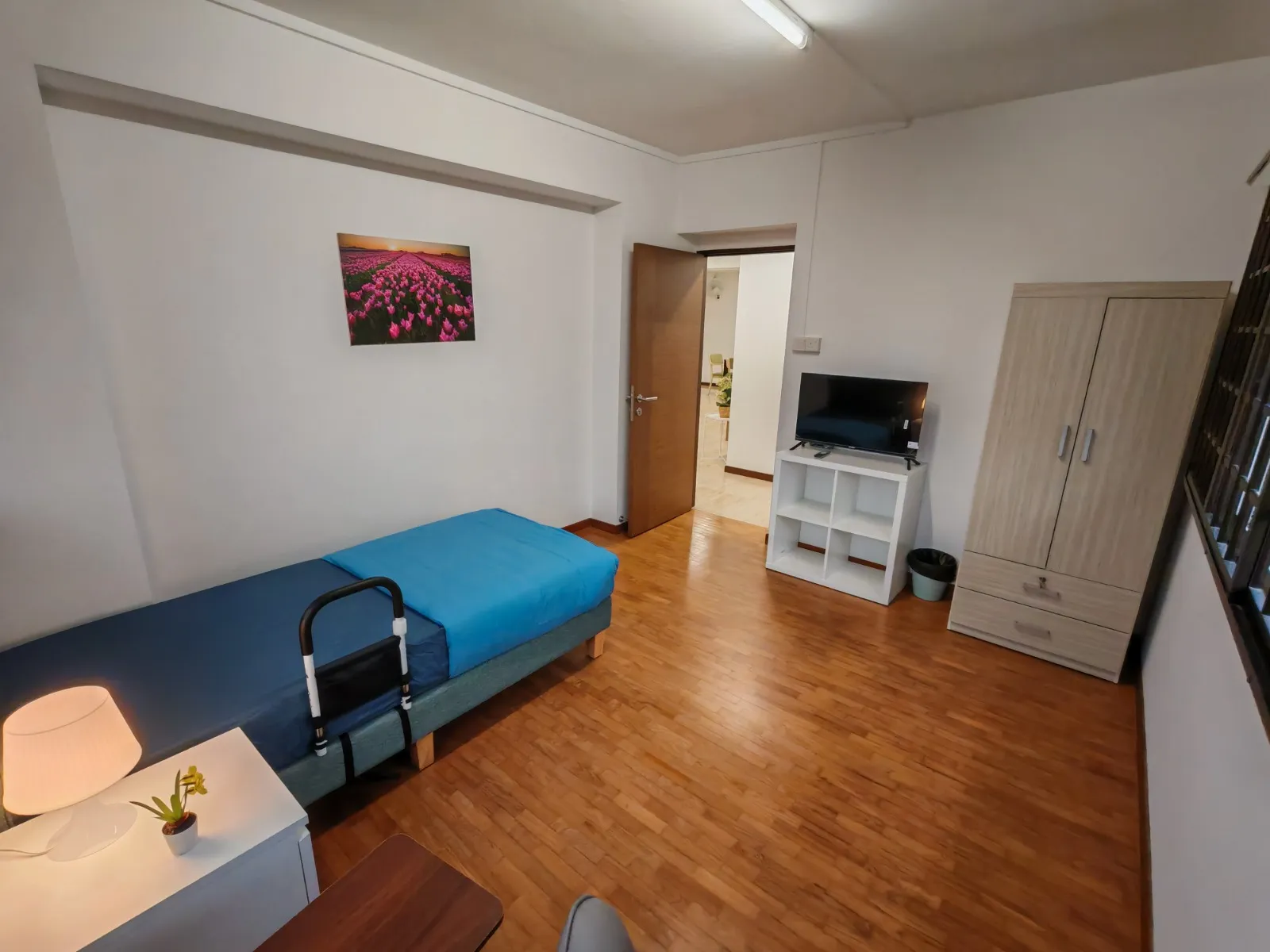
Set up the room before your parent arrives if you can: photos on the wall, clothes in the wardrobe, familiar items within reach. Walking into a room that already feels like theirs makes a big difference on day one.
Step 9: Keep move-in day calm
- Arrive mid-morning, not late in the day when everyone is tired.
- Keep the group small, with one or two family members, not the whole family.
- Stay for a meal so your parent eats with the other residents on their first day.
- Leave with a plan, such as "I'll come on Saturday", rather than a long goodbye.
Step 10: Support them through the first month
The first few weeks are an adjustment for everyone. Visit regularly but don't hover. Let staff build a relationship with your parent, and keep in touch with the care team about how they are settling in. Mixed feelings are normal, for your parent and for you.
Read more in our gentle guide to helping a parent settle into assisted living.
Frequently asked questions
How long does it take to move a parent into assisted living? It depends on the home's availability and your family's readiness. Small homes can often arrange a visit within days. The paperwork and packing usually take a week or two.
What if my parent refuses to move? Don't force it. Keep the conversation open, focus on their concerns, and consider a short respite stay first. Trying it for a few weeks often eases the fear of the unknown.
Can my parents move in together? In many cases, yes. See assisted living for couples.
Ready to take the first step?
At Blue Atria, our small homes in familiar neighbourhoods make the move gentler. Talk to our care team or arrange a visit to see daily life for yourself.